Showing posts with label planting indoors. Show all posts

Wednesday, April 29, 2015

How To Plant Tomatoes

It's almost tomato planting season! In some areas, you may be able to put tomatoes outside right now. Here in Central Ohio, Mother's Day is the traditional date, but my seedlings are growing nicely in the window in preparation for moving outdoors. So today I'm sharing some tips on how to plant tomatoes, America's most popular home-grown crop - and possibly my favorite!

It is wonderful to be able to eat and serve your own succulent tomatoes from the garden.  They have a sweet and rich flavor that store-bought tomatoes almost always lack. However, they are not always as simple to grow as you might expect.

How To Plant Tomatoes Outdoors

Three tomatoes of varying ripeness
Cherry tomatoes.  (Photo credit: Wikipedia)
Tomatoes are a climbing plant. You can grow them either in containers or in the ground, but they need to have a trellis or other support to climb.

They also like warmth and plenty of direct sunlight. They will grow in most parts of the USA from zone 3 and in the UK and Europe, but in cooler climates you should choose a suitable variety and be sure to plan a sheltered, sunny spot for them. Do not plant them outside until you are sure that there will be no more frost. Planting in containers has the advantage that you can easily move them into a greenhouse or into the house at night, if cold weather threatens.

It is possible to grow tomatoes from seed, but most people start with small plants from the nursery. Check plants carefully for any signs of disease. If you see any, go to a different nursery.

Soil pH should be from 6.0 to 7.0. You can check this with a soil testing kit from any nursery. If your soil tests outside of this range, either add product to alter its acidity level or plant your tomatoes in containers in compost of the right pH.

If planting in the ground, dig plenty of tomato compost into your soil, then dig a hole about a foot diameter for each plant. The holes should be 12 to 18 inches apart according to the variety of tomato (the label should instruct you on this). 

Put in the bottom of each hole a little compost followed by broken eggshells or calcium product from the nursery. Set the plants into the holes and fill with compost. It's fine to cover the lower branches of the growing plant, but at least 3-4 branches should be above ground.

Water them, then place a paper collar around the stalk at ground level to deter crawling pests, and cover with a cloche if your climate is cool. After a couple of weeks remove the cloche and collar, cover the soil with a layer of mulch and set up whatever supports your plant variety needs.

Tomato plants love water and need 1-2 inches of rain per week. If you get less than this, be sure to water them often.

State fruit - Tomato
State fruit - Tomato (Photo credit: Wikipedia)
How To Plant Tomatoes Indoors

Tomatoes can also be grown inside the house in containers, but they need lots of direct sunlight so you will need to position them carefully. They should get at least 6 hours of sunlight per day in order to grow well and produce good fruit.

Additional Tips On Planting Tomatoes

If you are growing tomatoes in the ground, be sure to rotate them to different parts of the garden each year. They are very prone to disease and moving them around will help to stop the common tomato diseases from becoming established.

For the same reason, if you are growing them in containers it is best to discard the compost and clean the container, as well as burning the remains of the plant, at the end of each season.

Warning: although tomato fruits are safe to eat, other parts of the plant can be poisonous. Protect from young children and pets.

Good luck with your tomato plants. I hope you have a bountiful and delicious crop!


Tuesday, December 13, 2011

Why Plants Make Us Happier

We are now learning that surrounding ourselves with growing plants helps relieve stress, as well as providing many other benefits. By taking care of our green friends (the ones with leaves not Martians!) :-) we will discover new hidden sides of our personality and will also learn how to love and care for both others and ourselves.

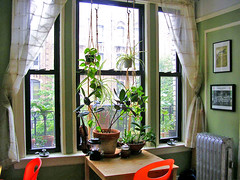
window of plants and more mismatched chairsImage by wockerjabby via FlickrBy taking on the care of a plant (sort of like a pet) we are assuming a new responsibility - we are adopting a breathing being. This helps us become more aware of our surroundings, as we have to pay attention to other needs that are exterior to ourselves. We become aware of the needs of another being: we learn how much water the plant needs, how much light it gets, the intervals it needs to receive water again, and how to keep it alive and thriving. At the same time we also become more aware of others, and the natural world. Visual contact with a beautiful plant can even help us realize our own beauty!

More and more studies show that taking care of plants can be an efficient method to improve the physical and emotional general condition. Plants have a serene effect that can reduce stress and relax muscles and therefore improve the moods of those in their surroundings.

Different studies have demonstrated that the existence of plants in the home can help reduce mental exhaustion. When we are overwhelmed with work, we just have to look up for a couple of minutes to a plant and we’ll instantly feel more relaxed. In conclusion, plants fascinate and attract people, they break boredom and monotony generated by forced attention. And the oxygen generated by plants creates a feeling of mental agility.

Growing Green Bamboo PlantsImage by epSos.de via FlickrLarge plants placed in the right spot can help insulate us from annoying surrounding noises. The technique is the same as the one of hanging paintings in an empty room to minimize the echo effects. The thick leaves will absorb a part of the noises, including the sound of the phone, Xerox, printer or coffee maker, making these sounds in your home less distracting and stressful.

So why not plant a plant indoors this winter, or gift someone with a lovely plant for the holidays? It is giving the gift of peace, and isn't that what the season should be all about?
Enhanced by Zemanta